
The Long Run February 2026

"They were clouds in my coffee
Clouds in my coffee, and...."
—You’re So Vain, Carly Simon
Continuing with the theme of the opening song lines and the mood of the country, he probably thinks this missive is about him. But we are going to try really hard to not go in that direction and keep it about the economy and the financial markets. While most commentators resort to explaining things in terms of right or left, events are rarely so black and white. There can indeed be clouds in the coffee. We therefore prefer the framework suggested by economist Pippa Malmgren that we view actions as either moving us forward or backward.
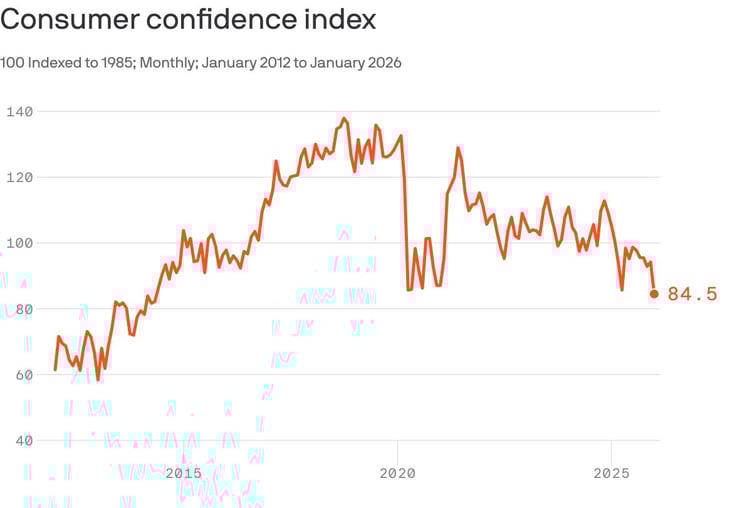
And, in this economy, most policies are moving Corporate America very much forward. They are receiving an extra-large, black coffee. Corporate profits and the stock market are at all time highs. Productivity is booming. Spending by the top 20% of the population has never been so strong. And yet, Main Street doesn’t feel like they are moving forward. They feel left behind. Consumer confidence is lower than it was during the Covid quarantine. Welcome to the “Boomcession,” where stocks just recorded one of their best three-year runs ever, yet most people feel more uncertain about their future.
Anticipation
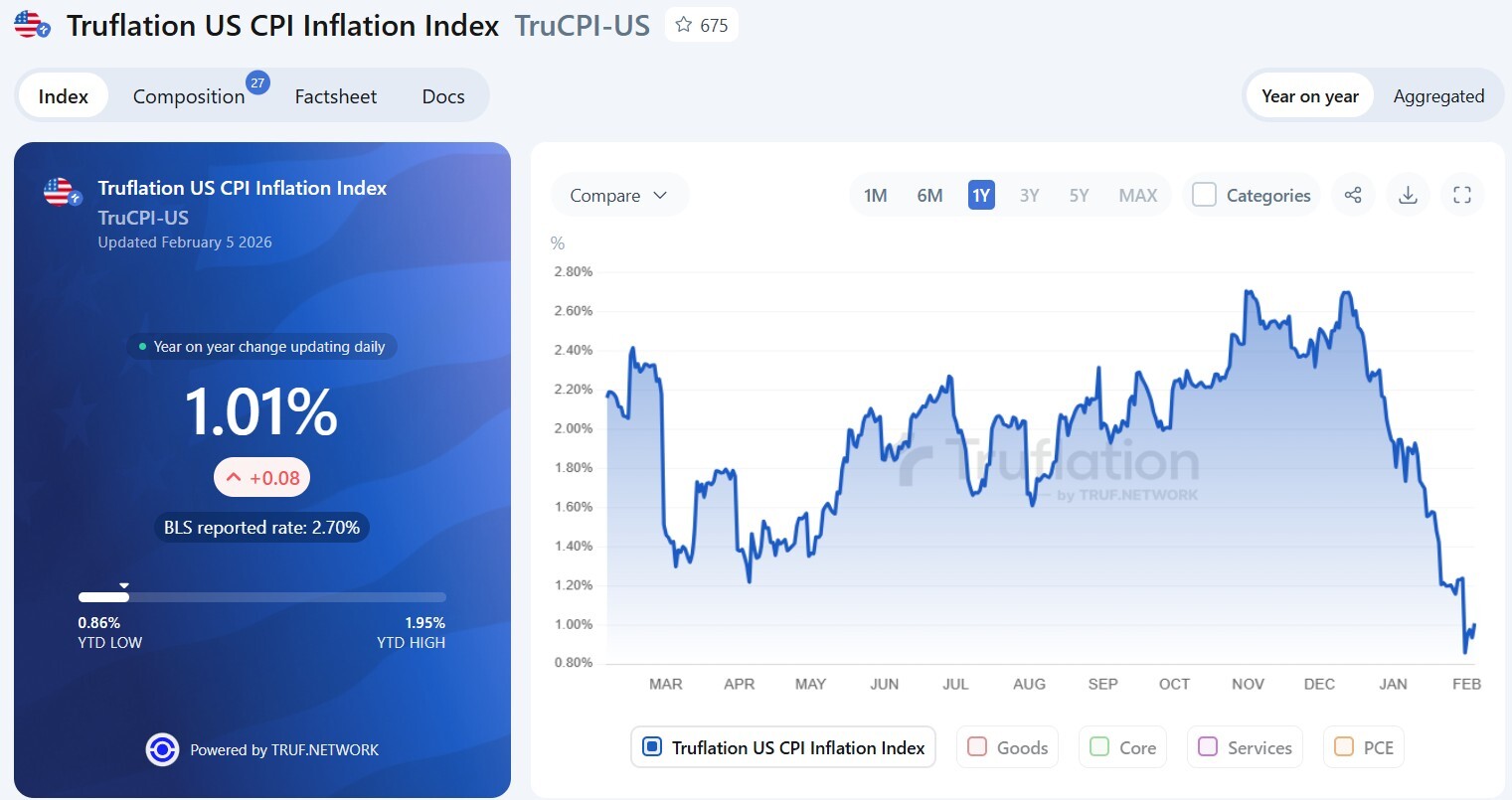
Last year wasn’t supposed to be a good year for the economy or the stock market. We were all told that tariffs would be very inflationary and would almost certainly cause a recession. Based on this outlook, stocks fell by over 20% in value early in the year when tariffs were first announced. Yet the anticipated inflation never came. And, as measured by our favorite source, Truflation, inflation has slowed sharply. (Truflation downloads the prices daily of over 10 million items and tends to give a better real-time indication of inflation than other sources.)
Why Haven’t Tariffs Caused Inflation and/or a Recession?
-
The main reason is that tariffs were never anywhere near as high as what headlines indicated. According to the economist Noah Smith, the actual average increased rate that importers were paying was 14%. While still seemingly meaningful on the surface, it falls to a somewhat insignificant level when one considers that imports account for only 14% of the U.S. economy. So we had 14% tax on 14% of the economy, which amounts to a 2% tax. Assuming some of this charge was absorbed by overseas manufacturers, we probably ended up with a total tax rate of 1% or less on the economy.
-
As we have repeatedly pointed out, aspects of these tariffs have been ruled unlawful. Two federal courts have already ruled them to be illegal, and we anticipate the Supreme Court will support this. In anticipation of potential reversals, many corporations have absorbed much of the cost of tariffs, believing they will get this money back.
So, while tariffs never materialized to the extent anticipated, large corporate tax cuts from last year’s tax bill did kick in to move earnings forward.
Coming Around Again
The biggest fear we had last year was how the shutdown of immigration would impact the economy. The consensus among economists was that this was likely to lead to a recession as well. Growth is basically a combination of hours worked plus productivity. Given the Census Bureau’s projection that the country is on trend to have net negative migration for the first time in over fifty years, it seemed reasonable to assume that working hours would decline as well as overall economic growth.
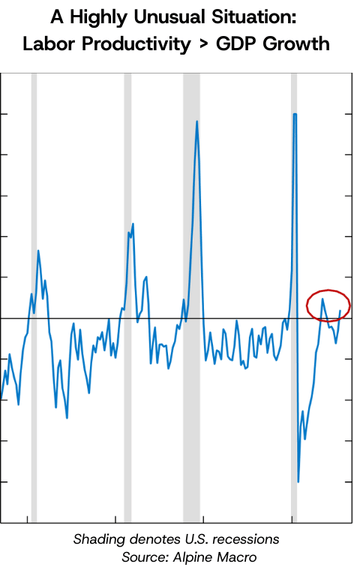
What most experts overlooked, however, was a surge in productivity that has made up for changes in the workforce. Since 2020 and the Covid quarantine, the economy has been learning how to produce more with less. Economic growth is being achieved with fewer workers. Historically, this has only happened during recessions, when unemployment falls faster than output. The fact that it is now occurring during an expansion is highly unusual and quite positive for profit growth. We would also note that this is happening before any significant impact from AI. In the most recent quarter, productivity increased by a startling 4.9%, well above recent levels of around 2%.
It Keeps You Runnin’
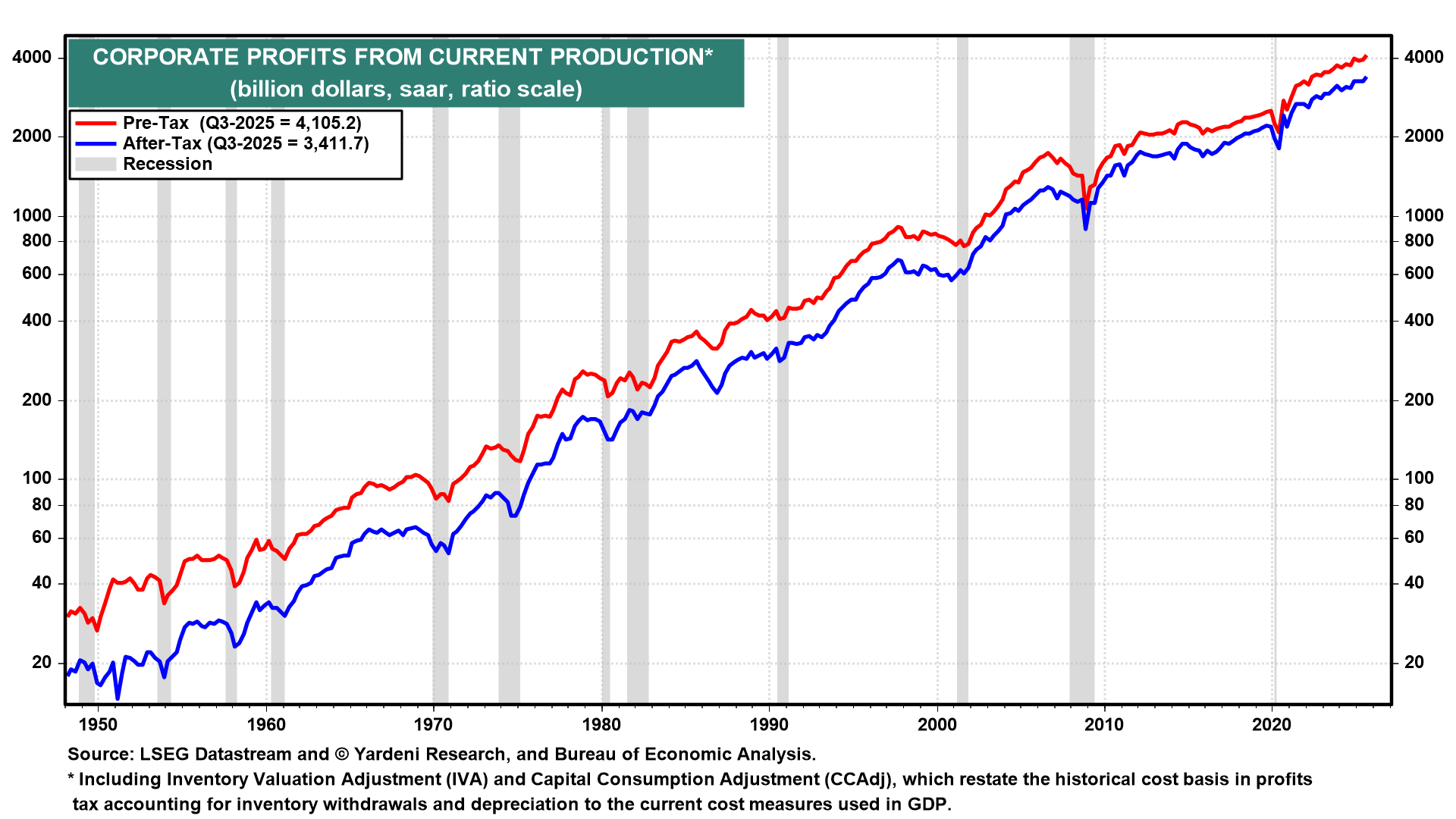
For those who have read our research over the years, you know that we have pointed out that the most important factor driving increases in stock prices is an acceleration in the rate of growth in earnings and cash flow. And nothing is more important to earnings growth than an expanding economy and a productivity-led boom—both of which we are now experiencing. Real GDP grew 3.8% in the second quarter of 2025 and 4.4% in the third quarter. The Atlanta Fed’s GDPNow model is predicting 5.4% growth for the fourth quarter. Corporate profits are at record levels and accelerating. As we write this, 89 of the S&P 500 companies that have reported earnings so far this quarter have recorded a 21.5% increase, well above last year's results.
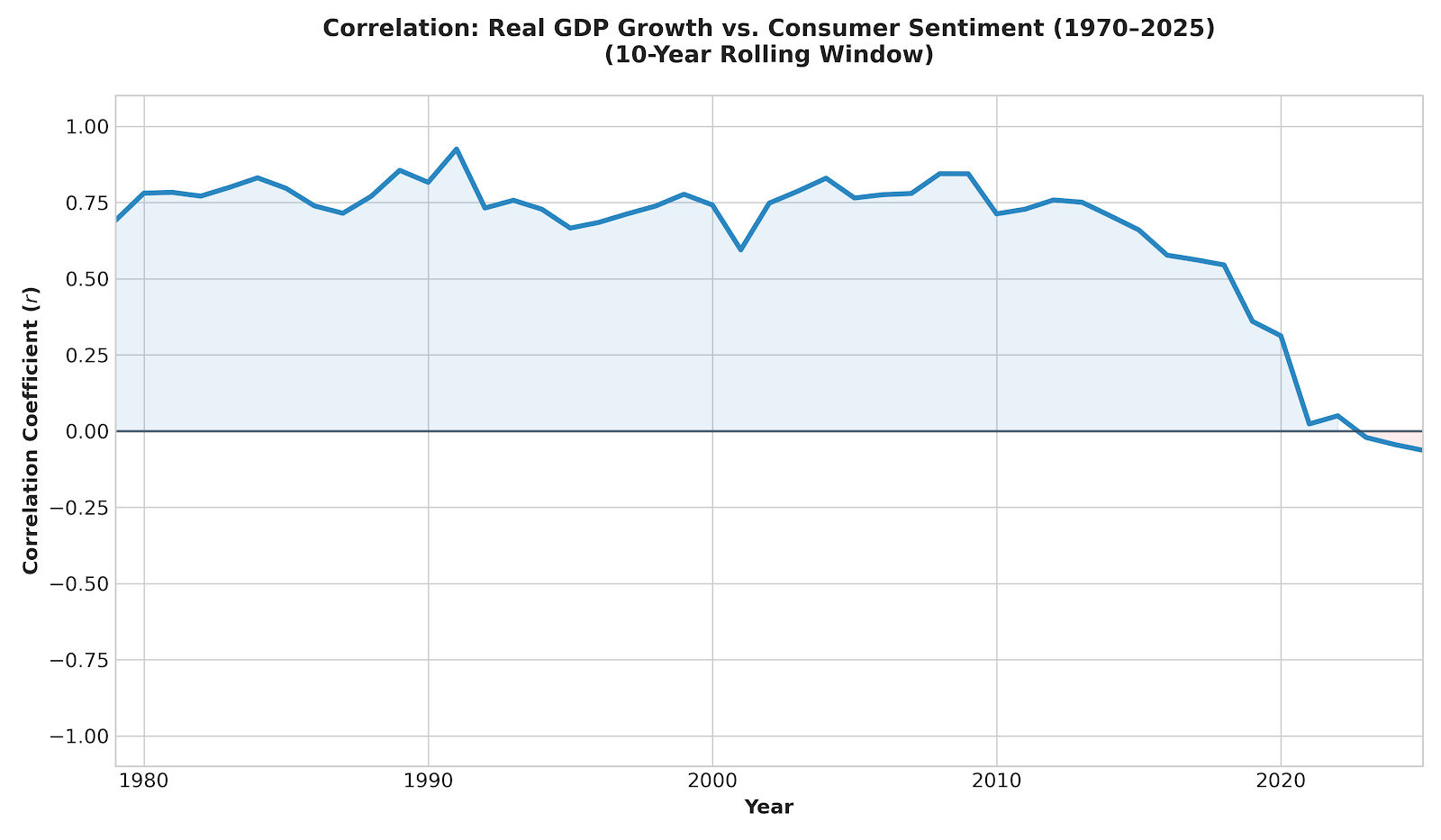
Lest you think we are too bullish, we will share the most puzzling cloud in our coffee. It would appear that growth in the economy no longer correlates directly with consumer sentiment. In the past, a better economy meant people felt better. Yet, since 2010, this is no longer true. As the following chart shows, there is now a negative correlation. Again, the bulk of Americans are feeling left out of the benefits of economic growth. Looking ahead, either the benefits of economic growth are more broadly shared—and the affordability issue is truly addressed—or the foundations of the economy will show more cracks.
Waterfall
Lower inflation, booming productivity and surging profits underpin the increase we have experienced in stock prices and seem likely to continue for the foreseeable future. We remain wary, however, how long Corporate America can continue to prosper while Main Street feels left out. We will continue to be concerned about possible changes to this period of corporate euphoria. Specifically:
-
If AI-led productivity gains result in large layoffs, we believe that will be quite negative for the economy and markets.
-
If the dollar continues to decline, that will be negative for future inflation trends.
-
As earnings growth rates are likely to slow later this year, comparisons become increasingly difficult.
-
And, while we said we would try not to talk about politics, the risk of policies that move us backwards is disturbingly high.
Our most important job is to anticipate change and manage the risk in your portfolio. While the economy has had a stretch of positive news, mismanagement of the country leaves plenty of potential for a reversal of some of these trends over the second half of the year. We welcome your thoughts on your account with us.
The Right Thing To Do
It wouldn’t feel right if we didn’t end with at least some mention of what is going on in our country. What has always moved our union forward is the freedom to express opinion, whether by discussion or protest, with the intention of influencing public opinion. There are obviously forces that wish to limit debate.
In the corporate world, ExxonMobil has received permission from the SEC to roll out a new system that would have all small investors who opt in to have their shares automatically voted by management. In our view, the intent is to limit shareholders' ability to influence corporate policies. We disagree with this trend and with all efforts to limit free expression.
Remember, you don’t have to be a person of influence to be influential. You just need the courage to express your beliefs.
Print and Download the Newsletter Here
IMPORTANT DISCLOSURES: This newsletter is provided for informational purposes only and does not constitute investment advice or a recommendation regarding any investment strategy, security, or transaction. It does not consider the investment objectives, financial situation, or needs of any individual. The views expressed are those of Reynders, McVeigh Capital Management, LLC (“RMCM”) as of the date of publication and are subject to change without notice. Forward-looking statements are not guarantees of future performance, and actual results may differ materially. No assurance is given that any investment objective will be achieved or that any investment will be profitable.
This material is proprietary and may not be reproduced or distributed without prior written consent. Information is believed to be reliable but is not guaranteed for accuracy or completeness, and RMCM assumes no obligation to update this material.